
11 Affiliate Marketing Mistakes Beginners Must Avoid in 2026
Affiliate marketing is one of the most accessible ways to start an online business. You do not need to create your own product, manage inventory, or handle customer support for every sale.
But starting affiliate marketing and actually making money from it are two completely different things.
Many beginners spend months creating content, promoting products, posting on social media, and trying different strategies without getting the results they expected.
The problem is not always a lack of effort. Often, it comes down to making avoidable mistakes.
The biggest affiliate marketing mistakes beginners make include choosing the wrong niche, promoting too many products, using too many traffic strategies, ignoring audience trust, and expecting results too quickly.
Whether you are using Facebook organic marketing, YouTube, TikTok, Instagram, blogging, or paid advertising, understanding these mistakes can save you time, money, and frustration.
Here are 11 common affiliate marketing mistakes and how to avoid them. In order to hold one like this.

1. Choosing a Niche Only Because It Pays High Commissions
One of the first mistakes beginners make is choosing a niche based entirely on how much money they could earn.
It is easy to get excited about affiliate programs offering hundreds of dollars per sale.
But a high commission does not automatically mean a good business opportunity.
If you do not understand your audience, their problems, or the products you are promoting, creating useful content becomes much harder.
For example, promoting expensive marketing software to someone who is just learning how to start an online business may not be the right approach.
How to Avoid This Mistake
Choose a niche based on audience demand, your interests, and the availability of valuable products.
Ask yourself what problems people in your niche face and whether you can consistently help them find solutions.
A relevant product that solves a real problem is more valuable than a high commission offer nobody needs.
2. Promoting Too Many Affiliate Products
When you first discover affiliate marketing, almost every offer can look like an opportunity.
You find one product offering recurring commissions, another offering a large payment per sale, and another promising impressive results.
Before long, you are promoting ten different products without understanding any of them particularly well.
This creates confusion for both you and your audience.
People need a clear reason to trust your recommendations.
How to Avoid This Mistake
Start with one audience and a small selection of complementary products.
For example, if you help beginners build online businesses, you could recommend a website builder, an email marketing platform, and a funnel builder.
Learn what each product does and when it makes sense for your audience.
Become a trusted resource instead of simply sharing affiliate links.
3. Trying Every Traffic Strategy at Once
This is one of the most common affiliate marketing mistakes.
You start with Facebook organic marketing.
A week later, someone tells you YouTube is the best way to generate traffic.
Then you discover TikTok, Instagram Reels, blogging, Pinterest, and paid advertising.
Suddenly, you are trying to create content for six different platforms while making little progress on any of them.
The problem is not the platforms themselves.
All of them can generate affiliate marketing traffic when used correctly.
The problem is trying to master everything simultaneously. In same rabbit hole I jumped at my beginning wanting to be at 7 platforms at the same time.
Ended up being all over the place, tired, burn out and without any sales…
How to Avoid This Mistake
Choose one primary traffic strategy based on your strengths and the audience you want to reach.
Remember at beginning the less is more!
1 Strategy, 1 platform and 1 Affiliate product.
Facebook Organic Marketing
Facebook can be useful for building relationships, participating in relevant communities, publishing educational content, and connecting with potential customers.
Focus on genuine conversations and valuable contributions rather than posting affiliate links everywhere.
YouTube
YouTube is excellent for tutorials, software reviews, educational videos, and product comparisons.
It can help people discover your content through both YouTube search and recommendations.
TikTok
TikTok is useful for reaching audiences through short videos, educational tips, demonstrations, and relatable content.
Strong opening moments and clear messaging can help attract attention.
Instagram allows you to build a personal brand through Reels, Stories, educational posts, and conversations with followers.
It is particularly useful when your audience responds well to visual content and personal communication.
Blogging and SEO
Blogging is valuable for creating detailed guides, tutorials, and product reviews that can attract visitors through search engines over time.
Paid Advertising
Paid advertising can help test offers and reach targeted audiences, but it requires a budget, tracking, and an understanding of campaign performance.
Which Traffic Source Should Beginners Choose?
| Platform | Best suited for |
|---|---|
| Facebook Organic | Community building and relationships |
| YouTube | Tutorials, reviews, and educational videos |
| TikTok | Short videos and audience discovery |
| Personal branding and visual content | |
| Blogging | Detailed content and search traffic |
| Paid Ads | Testing and scaling offers with a budget |
Start with one platform, understand how to attract the right people, and expand when you have a repeatable process.
One focused traffic strategy is usually better than five strategies executed inconsistently.
4. Posting Content Without a Clear Strategy
Publishing content every day does not automatically mean you are building an affiliate marketing business.
Many beginners post motivational quotes, random videos, product promotions, and educational tips without connecting them to a clear objective.
They might receive likes, views, or comments but struggle to turn that attention into meaningful business results.
This can happen on Facebook, Instagram, TikTok, YouTube, and blogs.
How to Avoid This Mistake
Create content around three main purposes.
Attract: Reach people who have problems related to your niche.
Educate: Help them understand their challenges and possible solutions.
Convert: Introduce relevant offers when they are ready to take the next step.
For example, if you promote online business software, you could publish a YouTube tutorial explaining how to build a landing page.
Then offer a free guide or additional training that helps viewers take action.
Your content should guide people through a useful journey rather than simply chase views.
5. Focusing on Selling Instead of Building Relationships
Affiliate marketing is not just about getting someone to click a link.
It is about helping people make informed decisions.
Unfortunately, some beginners approach every conversation as an opportunity to make a sale.
They send unsolicited messages, promote products in unrelated Facebook groups, or turn every Instagram conversation into a sales pitch.
These approaches can damage trust and may violate platform rules.
How to Avoid This Mistake
Focus on helping people first.
Answer questions, share practical advice, and participate in relevant conversations.
For example, if someone in a Facebook group asks how to start an online business, provide a useful explanation rather than immediately sending an affiliate link.
If they ask for additional help, you can direct them toward relevant resources.
The same principle applies to Instagram messages, YouTube comments, and TikTok interactions.
Relationships create opportunities. Aggressive promotion often creates resistance.
Struggle with selling? Try one really cool sales training that helped me a lot to get my ground going.
6. Ignoring the Importance of Personal Branding
You do not need to become a famous influencer to succeed with affiliate marketing.
However, having a recognizable identity can help people understand who you are, what you do, and why they should listen to you.
Some beginners constantly change their niche, message, content style, and products.
As a result, their audience never develops a clear understanding of what they offer.
How to Avoid This Mistake
Define three things.
- Who you want to help.
- What problems you help them solve.
- What makes your content useful or different.
Then communicate that message consistently.
You can build a personal brand through Facebook posts, YouTube videos, Instagram content, TikTok, or a blog.
Share useful knowledge, lessons from your experience, and practical examples.
You do not have to reveal every detail of your personal life or appear on camera if you are uncomfortable doing so.
A recognizable brand can also be built through a consistent voice, useful content, and a clear area of expertise.
People should understand what they can expect from you and why your content is worth following.
7. Expecting Fast Results and Giving Up Too Early
One of the biggest misconceptions about affiliate marketing is that it produces easy passive income.
You may see creators discussing impressive commissions without seeing the months or years of work that contributed to those results.
Beginners often underestimate how much learning is involved.
Building an audience on Facebook, growing a YouTube channel, creating TikTok content, or developing a successful blog all require experimentation and consistency.
Some strategies can generate attention quickly, while others take longer to develop.
However, attention does not automatically translate into sales.
Me Personally Spent around 3000$ and 9 months till my first major results, 4 months for 1 sale which was only 1$, I wanted to quit but that was not an option.
How to Avoid This Mistake
Focus on measurable progress rather than expecting immediate income.
Lower down your expectations, train your mindset and just showup everyday, there is no room for quiting.
Track things such as content consistency, relevant traffic, audience engagement, email subscribers, affiliate clicks, and conversions.
Give yourself time to learn what works.
At the same time, do not confuse consistency with repeating an ineffective strategy forever.
Review your results and make improvements.
Patience is important, but learning from your results is what makes patience productive.
8. Spending Too Much Money Before Validating Your Strategy
There are countless tools available for affiliate marketers.
Sales funnel builders, website platforms, email marketing software, AI tools, automation platforms, and advertising systems can all be useful.
But purchasing every tool does not guarantee success.
Some beginners spend hundreds of dollars every month before they have a clear audience, traffic source, or offer.
How to Avoid This Mistake
Start with the tools your strategy actually requires.
If you are building an audience through Instagram or TikTok, you may initially need only a way to create content and organize your recommendations.
If you are starting a blog, you may need hosting, a content management system, and basic analytics.
If you are building sales funnels, a platform such as ClickFunnels or Systeme.io may be relevant.
The important point is to match your tools to your business strategy.
Upgrade when you understand why additional functionality is necessary.
Software should support your business, not become your entire business.
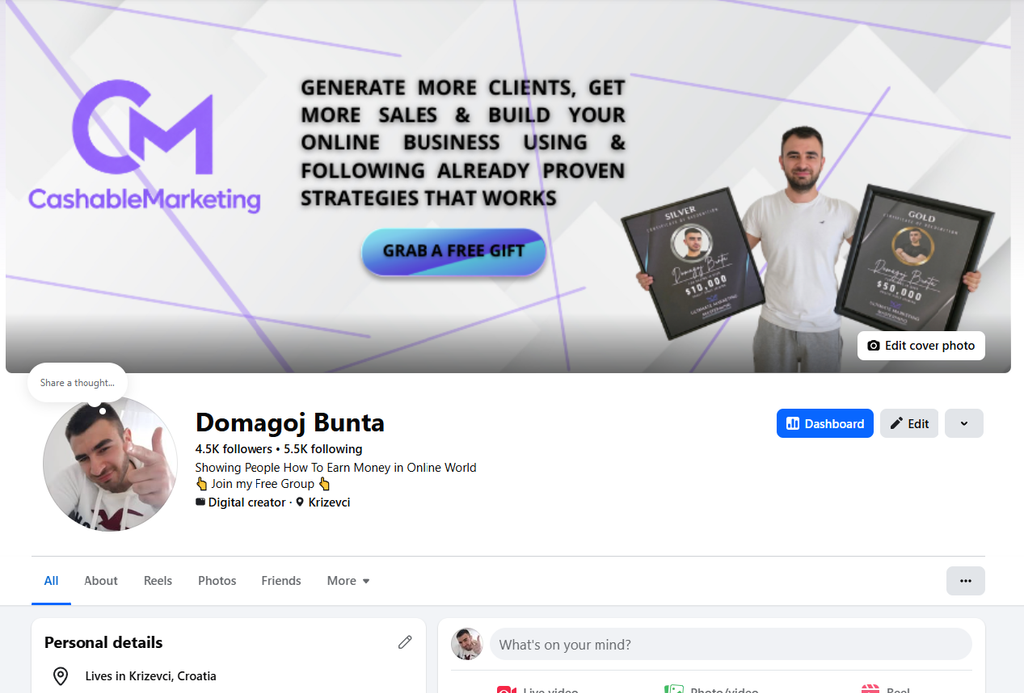
For Example I became top affiliate for couple different products and programs without paying a cent for different software while I was leveraging power of Facebook Organic Strategies, which for all I needed was my own Facebook Profile
One of the training helped me a lot was UMM, specialized to monetize your Facebook profile and your audience
9. Not Building an Audience You Can Reach Again
Imagine spending six months growing a TikTok account.
Your videos receive thousands of views, but you have no way to communicate directly with interested followers outside the platform.
If your reach suddenly declines, your business may suffer.
The same risk exists with Facebook, Instagram, YouTube, and search traffic.
This is why relying entirely on one external platform can be risky.
How to Avoid This Mistake
Consider building an email list alongside your main traffic strategy.
Offer something useful that encourages people to subscribe voluntarily.
Examples include:
- A free beginner guide.
- A practical checklist.
- A short email course.
- A useful template.
- A collection of recommended resources.
For example, you could publish educational YouTube videos and invite interested viewers to download a free guide.
The email list then allows you to continue sharing valuable content with subscribers who have opted in.
Always follow relevant privacy requirements and email marketing rules.
Social platforms can help people discover you. An email list can help you maintain the relationship.
10. Ignoring Analytics and Audience Feedback
A Facebook post receives hundreds of comments.
A TikTok video reaches 20,000 views.
A YouTube video generates 1,000 views.
But how many of those people are genuinely interested in your niche or the products you recommend?
Views and likes can be useful indicators, but they do not tell the entire story.
A smaller audience with strong interest can sometimes generate better business results than a much larger audience with little purchasing intent.
How to Avoid This Mistake
Track metrics that match your strategy.
Facebook and Instagram: Relevant engagement, profile visits, qualified conversations, and link clicks.
YouTube: Watch time, audience retention, relevant clicks, and subscriber growth.
TikTok: Viewer retention, profile visits, and meaningful engagement.
Blogging: Search traffic, article engagement, and affiliate link clicks.
Email Marketing: Subscriber growth, click activity, and conversions.
Also pay attention to questions people ask and problems they repeatedly mention.
Audience feedback can reveal valuable content ideas and potential opportunities.
Do not measure success only by how many people see your content. Measure whether you are reaching the right people.
11. Learning Too Much and Taking Too Little Action
Affiliate marketing beginners have access to more information than ever.
You can spend hours watching YouTube tutorials, reading blog articles, attending webinars, and exploring new strategies.
Learning is valuable, but it can also become a distraction.
Some beginners spend months preparing to start without publishing meaningful content or testing their ideas.
They are constantly searching for the perfect strategy.
How to Avoid This Mistake
Choose a simple plan and start executing it.
For example, if you choose Facebook organic marketing:
Monday: Research common problems in your niche.
Tuesday: Publish an educational post.
Wednesday: Participate in relevant community discussions.
Thursday: Share a practical tip or personal lesson.
Friday: Review engagement and identify opportunities for improvement.
If you choose YouTube, your weekly activities might focus on researching, recording, editing, publishing, and analyzing one useful video.
If you choose blogging, your plan might focus on publishing a detailed article and improving existing content.
The specific platform matters less than having a clear process.
Learn, implement, measure, and improve.
What Do Other Affiliate Marketers Commonly Get Wrong?
Discussions in affiliate marketing communities often reveal similar experiences.
Beginners describe trying too many strategies, struggling to generate consistent traffic, promoting products without understanding their audience, and expecting commissions too quickly.
Some spend months publishing content without knowing how to turn attention into meaningful business results.
Others focus heavily on courses and software while postponing the actual work of building an audience.
There is also an important distinction between generating traffic and generating qualified traffic.
A viral TikTok video might attract thousands of viewers, but those viewers may not be interested in your affiliate offers.
A smaller YouTube tutorial or a focused Facebook community discussion might attract people with much stronger interest.
The lesson is simple.
Affiliate marketing is not about reaching everyone. It is about reaching the right people with the right message.
How to Start Affiliate Marketing the Right Way in 2026
You do not need a complicated strategy to begin.
Follow these seven steps.
Step 1: Choose Your Niche
Identify a specific audience and the problems you want to help them solve.
Step 2: Select Relevant Affiliate Products
Find reputable products that offer real value to that audience.
Step 3: Choose Your Main Traffic Source
Decide whether Facebook, YouTube, TikTok, Instagram, blogging, or another platform best fits your strengths.
Step 4: Create Useful Content
Publish tutorials, educational posts, demonstrations, comparisons, and honest recommendations.
Step 5: Build Trust
Engage with your audience and prioritize helping people over aggressive selling.
Step 6: Create a Simple Conversion Process
Help interested visitors move from discovering your content to learning more about relevant products.
Step 7: Track Results and Improve
Use analytics and audience feedback to refine your content and marketing strategy.
The goal is not to build everything immediately.
It is to create a simple process that you can improve as you gain experience.
Frequently Asked Questions About Affiliate Marketing Mistakes
What is the biggest mistake beginners make in affiliate marketing?
One of the biggest mistakes is trying too many strategies at once without understanding the target audience. Beginners often achieve better focus by choosing one niche, one main traffic source, and a small selection of relevant products.
What is the best traffic source for affiliate marketing beginners?
There is no single best traffic source for everyone. Facebook can be useful for relationships and community engagement, YouTube for tutorials and reviews, TikTok and Instagram for short video content, and blogging for detailed educational content.
Can you do affiliate marketing using Facebook organic traffic?
Yes. Facebook organic marketing can help affiliate marketers build relationships, share useful content, and connect with relevant audiences. Avoid spam and follow Facebook community and promotional rules.
Is TikTok good for affiliate marketing?
TikTok can help affiliate marketers reach new audiences through short educational videos, demonstrations, and niche content. Results depend on content quality, audience relevance, and the conversion process.
Is YouTube better than blogging for affiliate marketing?
Neither is universally better. YouTube works well for visual demonstrations and tutorials, while blogging is useful for detailed guides and search focused content. The best option depends on your audience and content creation strengths.
Can you start affiliate marketing without a website?
Yes. Affiliate marketing can begin through social media, YouTube, or other approved channels. However, you must follow the rules of each affiliate program and platform. A website can become useful as your business grows.
How long does it take to succeed with affiliate marketing?
There is no guaranteed timeline. Results depend on audience demand, traffic quality, content, offers, skills, and consistency. Building a reliable business may take substantial time and experimentation.
Should beginners use paid advertising?
Paid advertising can be useful, but it introduces financial risk. Beginners should understand their offer, tracking, conversion economics, and advertising rules before committing significant money.
If you are still not sure about this, check my other article on topic: “ORGANIC TRAFFIC VS PAID TRAFFIC”
Final Thoughts: Focus on What Actually Builds an Affiliate Marketing Business
Affiliate marketing offers many opportunities, but it is easy to become distracted by new platforms, tools, and strategies.
One person recommends Facebook organic marketing.
Another promotes YouTube.
Someone else believes TikTok, Instagram, blogging, or paid advertising is the best approach.
The truth is that several strategies can work.
What matters is understanding your audience, creating useful content, building trust, and developing a process that connects interested people with relevant solutions.
You do not need to be everywhere.
You do not need the most expensive software.
And you do not need to know everything before you begin.
Choose one audience. Focus on one main traffic source. Provide value. Build relationships. Track your results. Improve consistently.
That is a much stronger foundation for building a sustainable affiliate marketing business.

Affiliate Disclosure
Some articles on CashableMarketing.com may contain affiliate links. If you purchase through these links, we may earn a commission at no additional cost to you. We aim to provide useful information and recommend products that are relevant to our readers.